Your cart is empty.
Continue ShoppingResearch
•Skin Barrier
•Why does skin get itchier with age? Look at its pH
Aging skin slowly loses its natural acidity, a 2026 review says, and that may weaken its barrier, shift its bacteria toward irritating types and make nerves quicker to signal itch.

Contents of this article
Key takeaways from this article
- The surface of healthy skin is slightly acidic. This review says it becomes less acidic with age.
- A less acidic surface may weaken the skin barrier, the outer layer that keeps water in and irritants out.
- It may also shift the skin's bacteria toward types linked to irritation, and away from protective ones.
- The authors argue these changes together help explain why itch is so common in older skin.
Why does skin often get itchier as you get older? A 2026 review in the American Journal of Clinical Dermatology points to pH, a measure of how acidic something is. It says aging skin slowly loses its natural acidity. That may weaken its outer layer, change its bacteria and make its nerves easier to set off.
What the scientists did
Itchy skin is common later in life, even with no rash to explain it. The authors wanted one simple picture of why.
They wrote a narrative review. That means they read and brought together earlier research on aging skin, its pH, its bacteria and itch. They did not run a new experiment or test any product.
What they found
Aging skin gets thinner and drier. It makes fewer of its own fats and repairs itself more slowly. So it loses water faster and gets irritated more easily.
Its surface gets less acidic. The review says this slows the enzymes that build the barrier's fats. It also speeds up enzymes that loosen the outer layer, weakening the barrier further.
Its bacteria shift. A less acidic surface favors bacteria that like those conditions and can add to irritation. Protective resident bacteria become less common.
Nerves become more sensitive. The authors say a weak barrier, shifted bacteria and busier enzymes add up. Together, they make the skin's nerves quicker to send itch signals.
They suggest that bringing skin back to its normal acidity is a logical way to approach this kind of itch.
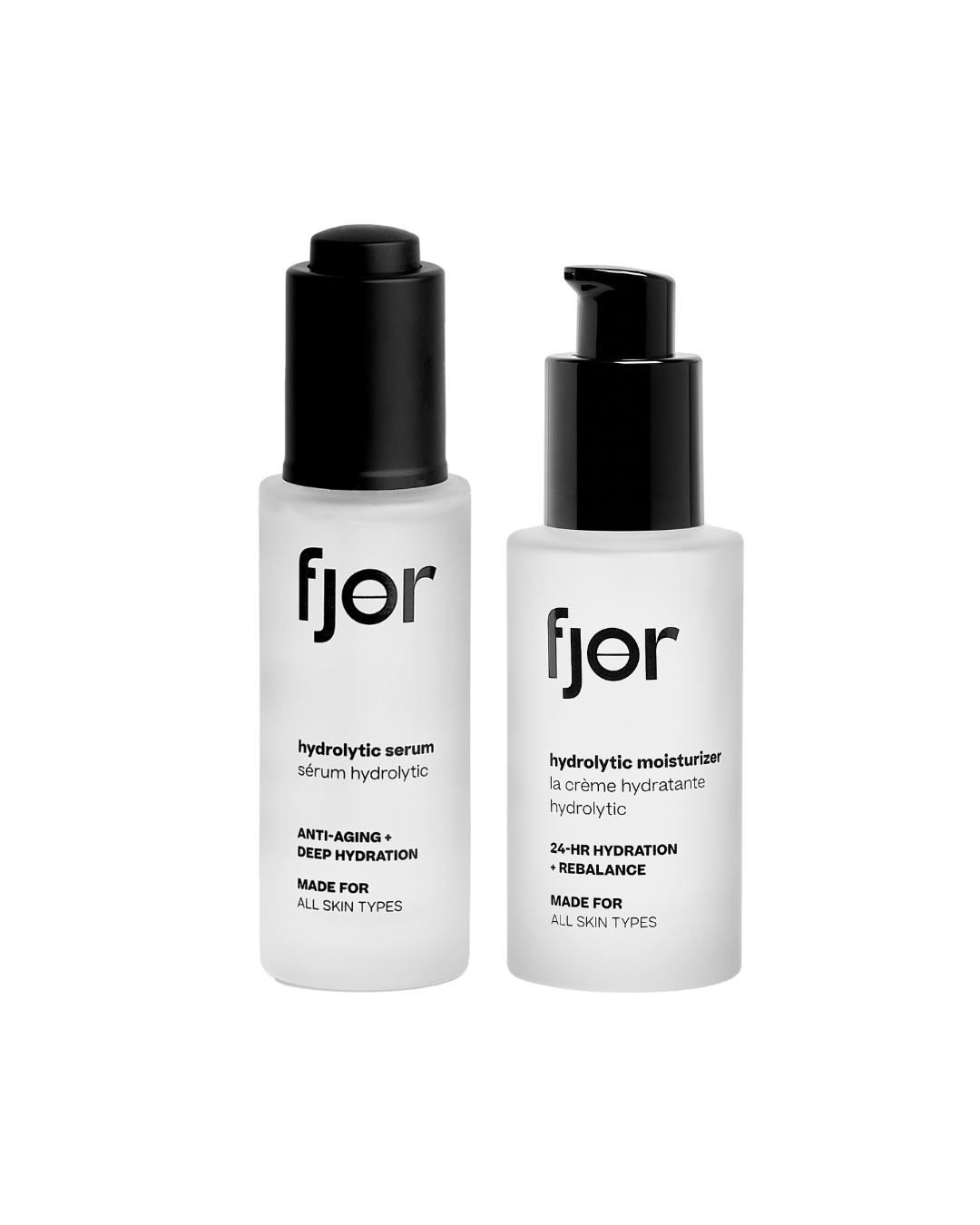
The Face Routine
Hydrolytic® Serum + Moisturizer
What this means for your skin
If your skin itches more than it used to, this review suggests it may be linked to slow changes in your skin's surface that come with age.
It also suggests that caring for older skin may be less about quick relief and more about protecting its barrier and its bacteria. Itch that lasts, or keeps you up at night, is worth checking with a doctor.
What we still don't know
- This is a review of earlier studies. It proposes a chain of cause and effect but does not prove it.
- It adds no new tests of whether making skin more acidic eases itch in older people.
- Competing interest: the paper states that one author works with a company developing skincare designed to restore skin pH. The other author declares no conflicts.
Why this matters to fjör
This review traces itch in older skin back to a slow loss of natural acidity, which leaves the barrier weaker and the resident bacteria less protective. Seen this way, itch is the end of a chain that starts years earlier.
That is why we think about skin that ages well, not quick fixes. The Hydrolytic® Enzyme is made to support the barrier and the balance of your skin's own bacteria. The enzyme assess your skin's pH and becomes more active depending on this level.
Frequently asked questions
Why does skin get itchier with age?
This review links it to thinner, drier skin that loses some of its natural acidity. That may weaken the barrier, shift its bacteria and make nerves more sensitive.
What is skin pH?
It is a measure of how acidic your skin's surface is. Healthy skin is slightly acidic and the review says it becomes less so with age.
Can skin bacteria affect itch?
The review suggests a less acidic surface favors bacteria linked to irritation over protective ones, which may add to itch.
References
- Pielak RM, Butler DC. The Role of Skin Surface pH in Age Associated Pruritus: Mechanistic and Clinical Insights. American Journal of Clinical Dermatology. 2026;27(5):1045-1055. https://doi.org/10.1007/s40257-026-01061-y