Your cart is empty.
Continue ShoppingResearch
•Skin Barrier
•What your pore size might say about your skin barrier
In a 2026 study of almost 200 young women, those with bigger pores also lost more water through their skin, had less springy skin and had fewer kinds of bacteria living on their face.

Contents of this article
Key takeaways from this article
- Women with bigger pores tended to lose more water through their skin.
- Their skin was also less springy, and fewer kinds of bacteria lived on it.
- The scientists see big pores as a sign of a weaker skin barrier and an unsettled mix of skin bacteria.
Could your pores say something about the health of your skin? A 2026 study in the International Journal of Cosmetic Science suggests they might. Young women with bigger pores also lost more water through their skin. Their skin was less springy, and fewer kinds of bacteria lived on it. The study found a link, not a cause.
What the scientists did
The authors say it is the first study to look at pores, skin health and skin bacteria together.
They worked with 199 women aged 18 to 35 who lived in Shanghai. They took close-up photos of each face and measured pore size. Then they sorted the women into four groups, from the smallest pores to the largest.
Next, they tested the skin with tools that do not break it. They measured water loss, springiness, oil and color. A genetic test showed which bacteria lived on each face.
What they found
The bigger the pores, the more the skin changed. Water loss went up step by step. That is a common way to check your skin barrier, the outer layer that keeps water in and irritants out.
Skin also got less springy as pores got bigger. The red pigment in blood and the brown pigment in skin both rose. Oil tended to rise too.
The skin microbiome, the community of tiny living things on your skin, changed as well. Faces with bigger pores had fewer kinds of bacteria. One kind stood out: a bacterium called Cutibacterium, which went with more skin oil in this study. It was more common on faces with big pores, while several other kinds were less common.
The scientists think skin oil and Cutibacterium may play key roles in pore size.
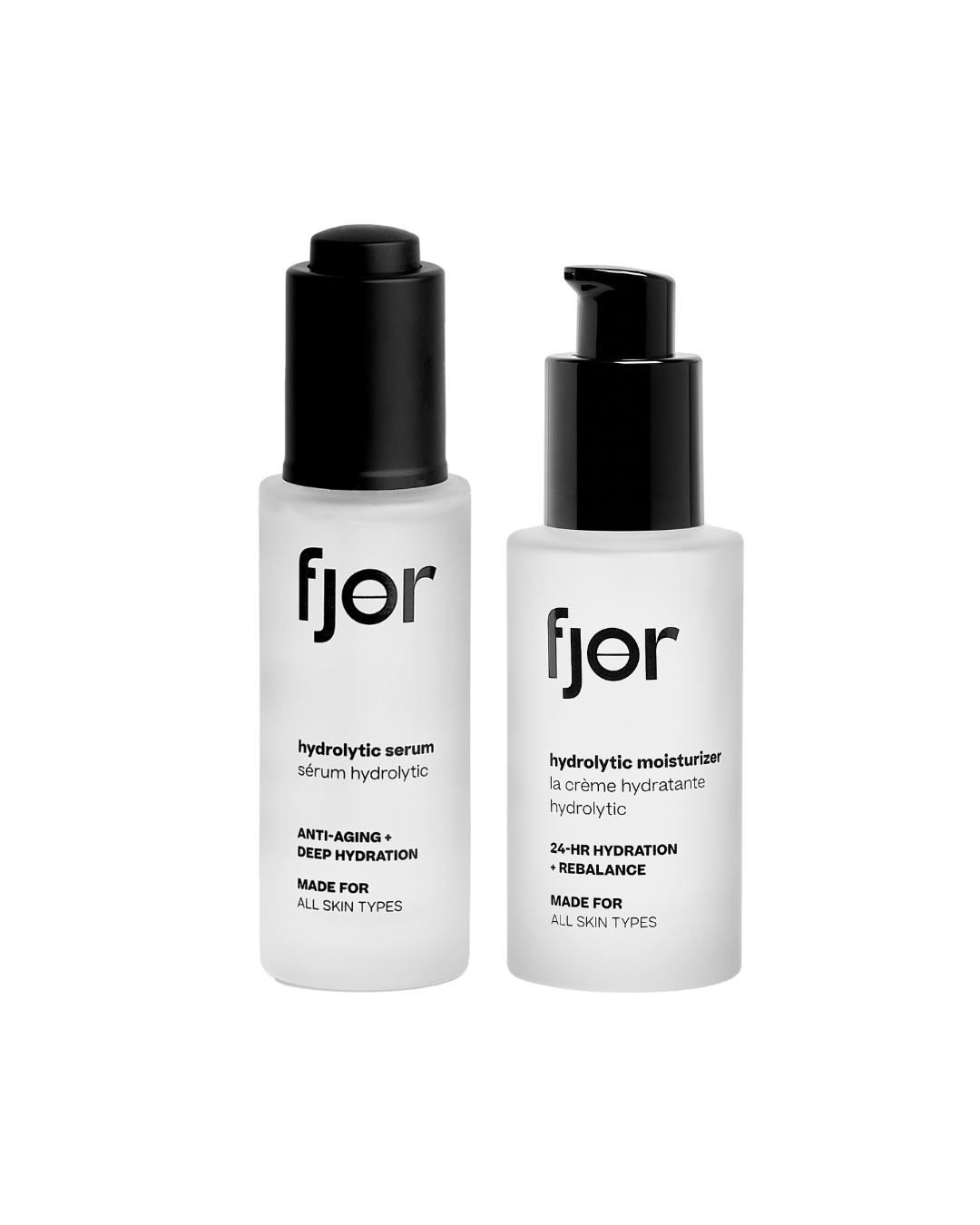
The Face Routine
Hydrolytic® Serum + Moisturizer
What this means for your skin
This study suggests pores may be part of a bigger picture. In these women, bigger pores tended to come with a leakier barrier, less bounce and fewer kinds of skin bacteria.
So caring for pores may be partly about caring for the whole skin. That could mean keeping the barrier strong, keeping oil in balance and supporting a varied mix of bacteria, rather than stripping your skin.
What we still don't know
- This study shows a link, not a cause. It can't tell us if barrier changes or bacteria make pores bigger, or the other way round.
- All the women were aged 18 to 35 and lived in one city. Results may differ for other people.
- No skincare product was tested.
Why this matters to fjör
Bigger pores went hand in hand with skin that lost more water and had fewer kinds of bacteria. So a pore may be less a surface problem and more a sign of how your whole skin is doing.
That is why we don't try to scrub or strip pores away. The Hydrolytic® Enzyme lifts off only dead skin cells and leaves your barrier and skin bacteria in place. If you care about how your pores look, looking after your barrier may be the quieter place to start. This study did not test fjör.
Frequently asked questions
Are big pores a sign of a weak skin barrier?
In this study, bigger pores went with more water loss and less springy skin. That is a link, not proof that one causes the other.
Does oily skin mean bigger pores?
Oil tended to rise with pore size in this study. The authors think skin oil may play a key role in pore size.
References
- Shao L, et al. (2026). Enlarged facial pores are associated with skin barrier impairment and microbiome dysbiosis in young Chinese women. International Journal of Cosmetic Science. https://doi.org/10.1111/ics.70144