Your cart is empty.
Continue ShoppingUpdated
5 Simple Steps to Boost Your Skin Microbiome Health and Diversity
Your skin microbiome is a unique ecosystem of microorganisms that protects your skin, reduces inflammation and keeps it hydrated. Modern habits, like using harsh products, eating processed foods and spending too little time outdoors, can disrupt its balance, and these five simple steps can help you support it.

Contents of this article
Key takeaways from this article
- Aim for at least 120 minutes a week in nature, which is linked to better health and wellbeing and exposes your skin to environmental microbes.
- Interact with animals to boost your skin microbiome naturally.
- Improve your gut health with fiber-rich and fermented foods for long-term skin benefits.
- Avoid harsh products and opt for microbiome-friendly alternatives to protect your skin barrier.
- Be ingredient-savvy and prioritize microbiome skincare to nurture your skin ecosystem.
120 Minutes of Nature a Week
Balancing your skin microbiome starts with spending time in nature. From soil microbes encountered while gardening to beneficial bacteria in fresh air, nature provides a simple, natural way to rebalance your skin’s microbial diversity. Research shows that exposure to green spaces enhances your skin's microbiome (Selway et al., 2020) (Ruokolainen et al., 2015), improving its natural defenses and resilience.
Activities like walking, hiking, or gardening can introduce these beneficial microbes to your skin (Saarenpää et al., 2024). Wild swimming, for instance, exposes your skin to waterborne bacteria, which can support microbiome balance and diversity.
A large study linked spending at least 120 minutes a week in nature with better self-reported health and wellbeing, and it made no difference whether that time came in one long visit or several shorter ones (White et al., 2019). If that seems unachievable, break it into smaller daily sessions, like 20-minute walks in a park or a quick dip in a natural water source. Spending time outdoors not only reduces stress but also helps rebalance the microbiome, which is essential for healthy, glowing skin.
Spending time in nature isn’t just relaxing: research suggests it can support and balance your skin microbiome naturally.

Interact with Animals
Regular interactions with animals can help rebalance your skin microbiome in a fun and natural way. Pets or other animals introduce a variety of beneficial microbes, enhancing your skin’s resilience and diversity (Trinh et al., 2018).
Studies show that pet owners, especially those with frequent and close contact, often share some of their microbiota with their pets, helping to balance microbiome health (Wetzels et al., 2021). Even if you don’t own a pet, visiting dog parks, volunteering at shelters, or spending time with friends’ animals can allow these beneficial exchanges to happen.
Animals act as carriers of environmental microbes that support microbiome diversity, enriching your skin’s ecosystem. Whether you’re cuddling a pet or volunteering at a shelter, interacting with animals is a simple way to help rebalance and support your skin microbiome.


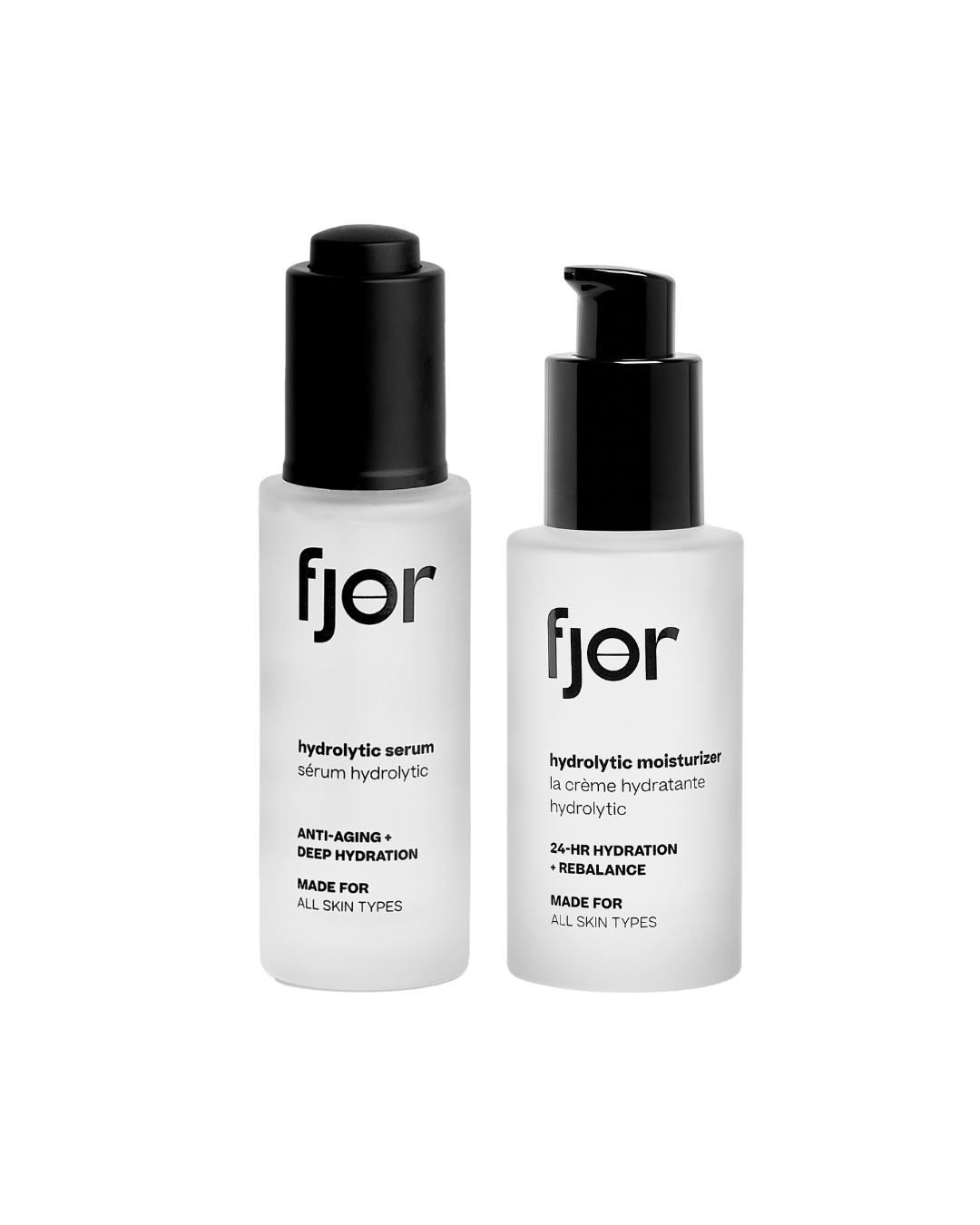
The Hydrolytic® Moisturizer
Barrier-building + hydration
Gut is the Groundwork
The link between gut health and skin health, commonly referred to as the gut-skin axis, plays a major role in improving skin microbiome diversity (De Pessemier et al., 2021). A healthy gut microbiome produces compounds like short-chain fatty acids that travel through your body, helping to balance and support your skin microbiome naturally.
On the other hand, poor gut health caused by low-fiber diets, processed foods, or stress can lead to skin issues like dryness, sensitivity, and inflammation.
To support the gut-skin axis, focus on eating fiber-rich foods like vegetables, legumes, and whole grains. Incorporating fermented foods like yogurt, kimchi, or sauerkraut can also boost probiotics in your gut, which contribute to both gut health and glowing, healthy skin.
Looking to improve your gut microbiome for long-term skin benefits? Start with a daily high-fiber smoothie or fermented snack to nourish both your gut and your skin.

Know Your Products
The skincare and household products you use every day play a huge role in your skin microbiome’s health. Ingredients like synthetic fragrances, harsh surfactants, and certain preservatives can strip your skin of beneficial microbes, weakening your skin barrier and increasing irritation (Draelos, 2018) (Carvalho et al., 2023).
Even products like laundry detergents and deodorants leave residues that may interact negatively with your microbiome (Mayerhofer and Pali-Schöll, 2024). Over time, repeated exposure to these residues can disrupt your skin’s delicate microbial ecosystem, reducing its ability to maintain a natural balance.
To support your microbiome, choose microbiome-safe products that are gentle and free of unnecessary preservatives or harsh ingredients. Look for options labeled as microbiome-friendly skincare or use apps to assess product safety and their impact on sensitive skin.
By switching to microbiome-friendly alternatives, you can protect your skin’s natural balance and avoid unnecessary disruption. Knowing your products is a key step to supporting your microbiome naturally.

Skip The Strippers
Protecting your skin microbiome starts with understanding how certain ingredient categories in leave-on products can impact its balance. Research shows that harsh preservatives, alcohol-based formulations, and aggressive exfoliators in skincare products can disrupt the microbiome, potentially harming its natural equilibrium (Carvalho et al., 2023). This can weaken your skin’s defenses, leading to irritation, increased sensitivity, or a compromised skin barrier.
Laboratory studies suggest that some preservatives commonly used in leave-on cosmetics can inhibit or kill beneficial skin bacteria such as Staphylococcus epidermidis, even at the maximum concentrations permitted in skincare formulations (Zhang et al., 2023). Such disruptions can impact your skin's ability to maintain a healthy balance, making it more vulnerable to external stressors and irritation.
Choosing microbiome-friendly products with gentler formulations can help maintain the natural harmony of your skin. Opt for products designed to support rather than disrupt, and avoid overuse of formulations with antimicrobial preservatives or other stripping agents. Transitioning gradually to gentler options allows your skin to adjust and encourages a healthier, more resilient microbiome over time.
Conclusion
Your skin microbiome is influenced by more than just the products you use: it’s a reflection of your entire lifestyle (Wallen-Russell and Wallen-Russell, 2017) (Wallen-Russell and Wallen-Russell, 2020). From spending time in nature and interacting with animals to eating gut-friendly foods and being mindful of your household products, small changes can have a big impact on the health and diversity of your skin’s microbial ecosystem. By taking a balanced, intentional approach to your habits and choices, you can support your skin microbiome and, in turn, enjoy healthier, more resilient skin.
Looking after your skin microbiome isn’t complicated. It’s about making mindful, science-backed choices in your everyday life. Start today and take the first step toward glowing, healthy skin by prioritizing your skin microbiome health. Your skin will thank you.
Frequently asked questions
Can the skin microbiome regenerate if it becomes unbalanced?
Yes, the skin microbiome is dynamic and can recover when given the right conditions. Supporting it with gentle skincare, reducing environmental stressors, and following a microbiome-friendly lifestyle can help restore balance.
Are there specific foods or lifestyle habits that can influence my skin microbiome?
Yes, eating a fiber-rich diet with plenty of fruits, vegetables, and fermented foods can support your microbiome. Avoid processed foods and excessive sugar, as they may disrupt microbial balance. Lifestyle habits like spending time outdoors and managing stress also positively influence your skin microbiome.
What can I do to maintain a balanced skin microbiome in my daily life?
You can maintain a healthy skin microbiome by using gentle, microbiome-friendly skincare products, avoiding harsh cleansers or antibacterial soaps, and protecting your skin from over-exfoliation. Spending time in nature, staying hydrated, and eating a balanced diet also contribute to a thriving microbiome.
How can I tell if my skin microbiome is unbalanced?
Signs include heightened sensitivity, redness, dryness, premature aging or frequent issues like breakouts or irritation.
Why do modern lifestyles affect the skin microbiome?
Pollution, harsh skincare products, over-cleansing, and stress can disrupt the natural balance of skin microbes, weakening the skin's defenses (Boonpethkaew et al., 2024).
What does it mean when the skin microbiome is unbalanced?
An unbalanced microbiome occurs when harmful microbes outnumber beneficial ones, leading to skin issues like sensitivity, dryness, or breakouts.
What are microorganisms?
Microorganisms are tiny living beings, including bacteria, fungi, and viruses, that make up the skin microbiome and contribute to its balance.
What is a microbe?
A microbe is a microscopic organism, such as bacteria, fungi, or viruses, that plays a vital role in protecting and supporting your skin's health.
How do microbes protect the skin?
Microbes create a natural barrier that defends against harmful bacteria, reduces inflammation, and maintains hydration.
Authors

References
- Selway CA, Mills JG, Weinstein P, et al. Transfer of environmental microbes to the skin and respiratory tract of humans after urban green space exposure. Environment International. 2020;145:106084. https://doi.org/10.1016/j.envint.2020.106084
- Ruokolainen L, von Hertzen L, Fyhrquist N, et al. Green areas around homes reduce atopic sensitization in children. Allergy. 2015;70(2):195-202. https://doi.org/10.1111/all.12545
- Saarenpää M, Roslund MI, Nurminen N, et al. Urban indoor gardening enhances immune regulation and diversifies skin microbiota: a placebo-controlled double-blinded intervention study. Environment International. 2024;187:108705. https://doi.org/10.1016/j.envint.2024.108705
- White MP, Alcock I, Grellier J, et al. Spending at least 120 minutes a week in nature is associated with good health and wellbeing. Scientific Reports. 2019;9(1):7730. https://doi.org/10.1038/s41598-019-44097-3
- Trinh P, Zaneveld JR, Safranek S, et al. One Health relationships between human, animal, and environmental microbiomes: a mini-review. Frontiers in Public Health. 2018;6:235. https://doi.org/10.3389/fpubh.2018.00235
- Wetzels SU, Strachan CR, Conrady B, et al. Wolves, dogs and humans in regular contact can mutually impact each other's skin microbiota. Scientific Reports. 2021;11(1):17106. https://doi.org/10.1038/s41598-021-96160-7
- De Pessemier B, Grine L, Debaere M, et al. Gut-skin axis: current knowledge of the interrelationship between microbial dysbiosis and skin conditions. Microorganisms. 2021;9(2):353. https://doi.org/10.3390/microorganisms9020353
- Draelos ZD. The science behind skin care: cleansers. Journal of Cosmetic Dermatology. 2018;17(1):8-14. https://doi.org/10.1111/jocd.12469
- Carvalho MJ, S Oliveira AL, Santos Pedrosa S, et al. Skin microbiota and the cosmetic industry. Microbial Ecology. 2023;86(1):86-96. https://doi.org/10.1007/s00248-022-02070-0
- Mayerhofer H, Pali-Schöll I. One health: the impact of environment, detergents and hygiene on barrier, microbiome and allergy. Allergo Journal International. 2024;33(7):252-262. https://doi.org/10.1007/s40629-024-00307-7
- Zhang W, Wang X, Zhao L, et al. Effect of leave-on cosmetic antimicrobial preservatives on healthy skin resident Staphylococcus epidermidis. Journal of Cosmetic Dermatology. 2023;22(7):2115-2121. https://doi.org/10.1111/jocd.15690
- Wallen-Russell C, Wallen-Russell S. Meta analysis of skin microbiome: new link between skin microbiota diversity and skin health with proposal to use this as a future mechanism to determine whether cosmetic products damage the skin. Cosmetics. 2017;4(2):14. https://doi.org/10.3390/cosmetics4020014
- Wallen-Russell C, Wallen-Russell S. A new benchmark to determine what healthy western skin looks like in terms of biodiversity using standardised methodology. Cosmetics. 2020;7(4):79. https://doi.org/10.3390/cosmetics7040079
- Boonpethkaew S, Charoensuksira S, Meephansan J, et al. The influence of air pollution on skin microbiome: a link to skin barrier dysfunction. Archives of Dermatological Research. 2024;316(10):710. https://doi.org/10.1007/s00403-024-03448-5