Updated
Skip the Strippers: Why Harsh Exfoliants Might Be Causing You Harm
We have been taught to scrub, peel and strip away layers in pursuit of glowing skin. Harsh methods like retinol and alpha/beta hydroxy acids (AHAs/BHAs) may deliver quick results, but they can come with a hidden cost: irritation, sensitivity and a disrupted skin microbiome.

Contents of this article
Key takeaways from this article
- Harsh exfoliants like retinol and AHAs/BHAs can damage the skin barrier and cause irritation.
- Retinol now faces stricter EU limits because of concerns about total vitamin A exposure from cosmetics, food and supplements.
- AHAs/BHAs are gentler but still have side effects, and there is little research on their effects on the skin microbiome.
- Enzyme exfoliators are gentle on the skin, and the Hydrolytic® Enzyme also supports microbiome diversity.
Why Exfoliation Needs a Smarter Approach
The goal of exfoliation should be to gently remove dead skin cells to reveal a fresh complexion, without damaging the protective layers of the skin.
However, this is difficult. The skin's outer layer is also home to its commensal microbes, and its dry, acidic conditions help shape which of them thrive (Byrd et al., 2018). Exfoliating too harshly can disrupt that layer, which may upset the balance of the microbiome and promote inflammation.
Let’s take a closer look at why some exfoliants fall short and what we can use to overcome their issues.
Retinol’s Not-So-Perfect Reputation
Retinol is often celebrated for its ability to smooth fine lines and improve skin texture, but the truth is more complex. Retinol's harsh effects on the skin barrier make it unsuitable for many, particularly those with sensitive skin (Narsa et al., 2024).
Retinol irritation arises from three primary mechanisms, as outlined in studies. First, it disrupts the skin barrier by impairing key proteins like filaggrin, which increases transepidermal water loss (TEWL) and weakens the skin's protective layer (Kang et al., 2021; Narsa et al., 2024). Second, it triggers an inflammatory response by releasing pro-inflammatory cytokines such as interleukins and TNF-α, leading to redness, peeling, and swelling (Kang et al., 2021). Finally, retinol induces neurogenic inflammation by activating the TRPV1 channel on sensory neurons, causing sensations of burning and stinging (Kang et al., 2021).
This irritation isn’t just a temporary inconvenience: it can leave your skin vulnerable to external pathogens and UV exposure.
In response to these concerns, the EU Commission introduced stricter limits on retinol in skincare products, citing the risk that vitamin A from cosmetics adds to the vitamin A people already get from food and supplements, which may be of concern for the most highly exposed consumers (Commission Regulation (EU) 2024/996). Since 1 November 2025, new products placed on the EU market must cap retinol and its esters at 0.3% retinol equivalent in face and other leave-on and rinse-off products and 0.05% in body lotions, and from 1 May 2027 products that do not comply can no longer be sold in the EU. Products must also carry the warning “Contains Vitamin A. Consider your daily intake before use.” Total exposure matters because high intake of preformed vitamin A in early pregnancy has been linked to birth defects (Rothman et al., 1995); if you are pregnant or planning a pregnancy, talk to your doctor about vitamin A and retinoid use.
We’ve searched extensively for research on retinol’s impact on the skin microbiome and found very little. The one peer-reviewed study we found followed just 18 women for 28 days: overall microbial diversity stayed stable, but in the 9 women whose skin reacted badly to retinol, some bacterial species rose and then fell as their skin adjusted (Huang et al., 2025). Studies this small cannot tell us much about retinol’s long-term effects on the microbiome, which remain an open question.
While retinol has its place in skincare, its harshness and the lack of robust evidence about its microbiome effects make it a risky choice for many.
AHAs/BHAs Aren’t Without Their Issues
Alpha/beta hydroxy acids (AHAs/BHAs), such as glycolic acid and lactic acid, are often marketed as a gentler alternative to retinol. While they are less likely to cause the extreme irritation associated with retinol, they still pose potential risks.
AHAs/BHAs work by thinning the outermost layer of the skin (the stratum corneum) to reveal fresher skin underneath. However, especially at higher concentrations, this process can also disrupt the skin barrier, which shows up as increased TEWL, and cause redness and irritation (Almeman, 2024). Additionally, AHAs can make skin more vulnerable to UV radiation: in one trial, four weeks of 10% glycolic acid increased UV-induced sunburn cells, an effect that reversed within a week of stopping (Kaidbey et al., 2003; Almeman, 2024).
Despite their popularity, little is known about how AHAs/BHAs affect the skin microbiome. While there is extensive research on their exfoliating benefits, studies fail to address their impact on microbiome balance. This gap leaves questions about their long-term safety unanswered.
Why Enzymes Are Better
Unlike retinol and AHAs, enzyme exfoliators work in harmony with your skin. Enzymes target only dead surface cells, without going deeper into the skin to disrupt living layers. This leaves the skin barrier and live cells intact.
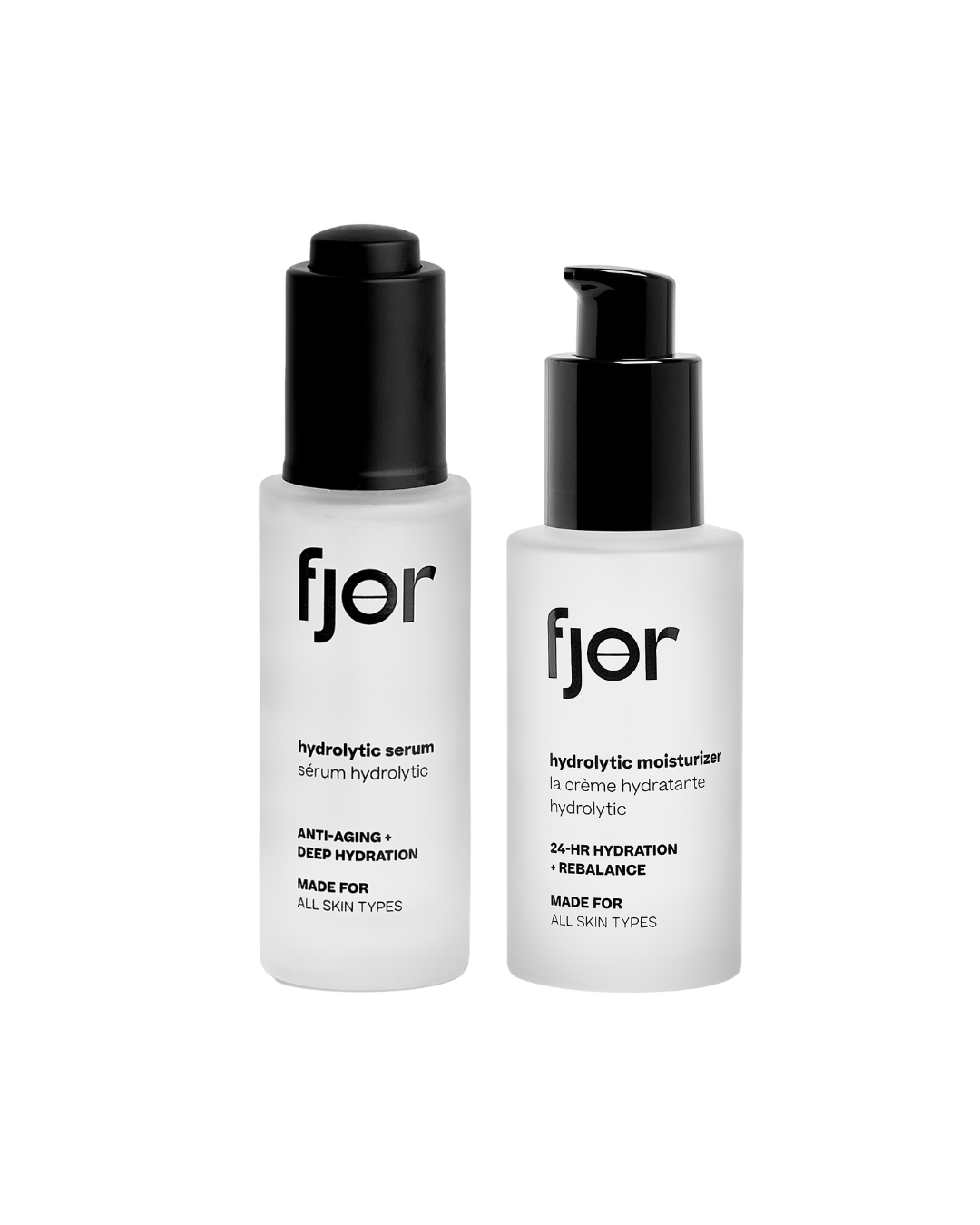
In particular, the Hydrolytic® Enzyme stands out by supporting microbiome diversity and the balance of beneficial microorganisms while exfoliating gently. It is designed to avoid the key drawbacks of harsher exfoliants like retinol and AHAs/BHAs.
fjör’s Recommendation: Skip the Strippers
At fjör, we believe skincare should work with your skin, not against it. Harsh exfoliants like retinol and AHAs/BHAs may promise instant results, but their long-term risks to your skin barrier and microbiome are under research and could be considerable.
Instead, we recommend choosing enzyme-based exfoliators. These gentle alternatives respect your skin’s natural balance while delivering visible results. So, skip the strippers and choose an approach to exfoliation that puts healthy, resilient skin ahead of quick fixes.
Frequently asked questions
What is retinol, and how does it work?
Retinol is a derivative of vitamin A commonly used in skincare and prized for smoothing fine lines. It works by increasing skin cell turnover, stimulating collagen production, and reducing fine lines and wrinkles. However, it can also disrupt the skin barrier and cause irritation, redness, and dryness, especially with overuse or high concentrations.
What is fjör?
fjör is a microbiome skincare brand from Scandinavia, designed to boost skin health by enhancing microbiome diversity. Using innovative Hydrolytic® Enzyme technology, fjör supports sensitive skin with a minimalist approach, focusing on resilience, hydration, and balance for a naturally radiant complexion.
What are AHAs, and what do they do for the skin?
Alpha/beta hydroxy acids (AHAs/BHAs) are water-soluble acids like glycolic acid and lactic acid that exfoliate the skin by dissolving the bonds between dead skin cells. This helps reveal fresher, smoother skin underneath. However, AHAs/BHAs can also thin the skin’s outer layer, making it more sensitive to UV radiation and prone to irritation.
What is the Hydrolytic® Enzyme, and how does it benefit the skin?
The Hydrolytic® Enzyme is a gentle exfoliating ingredient designed to target and remove only dead skin cells without damaging live cells or the skin barrier. It helps maintain microbiome diversity, promoting a balanced and healthy skin ecosystem while delivering effective exfoliation.
What is the skin barrier, and why is it important?
The skin barrier, also known as the stratum corneum, is the outermost layer of the skin that acts as a protective shield. It prevents water loss, keeps out harmful substances, and supports skin health. A damaged barrier can lead to dryness, irritation, and increased sensitivity to external stressors.
What is microbiome diversity, and why does it matter for skin health?
Microbiome diversity refers to the variety of microorganisms, such as bacteria and fungi, living on the skin. A diverse microbiome helps protect the skin from harmful pathogens, reduce inflammation, and maintain overall skin health. Low diversity can contribute to sensitivity, redness, and other skin issues.
How do AHAs impact the skin barrier?
AHAs exfoliate by thinning the outer skin layer, which can compromise the skin barrier. This leads to increased transepidermal water loss (TEWL), making the skin more vulnerable to irritants and environmental damage. Overuse can also exacerbate dryness and sensitivity.
Authors

References
- Narsa AC, Suhandi C, Afidika J, et al. A comprehensive review of the strategies to reduce retinoid-induced skin irritation in topical formulation. Dermatology Research and Practice. 2024;2024:5551774. https://doi.org/10.1155/2024/5551774
- Kang S, Kim K, Jun SH, et al. Anti-irritant strategy against retinol based on the genetic analysis of Korean population: a genetically guided top-down approach. Pharmaceutics. 2021;13(12):2006. https://doi.org/10.3390/pharmaceutics13122006
- European Commission. Commission Regulation (EU) 2024/996 of 3 April 2024 amending Regulation (EC) No 1223/2009 of the European Parliament and of the Council as regards the use of Vitamin A, Alpha-Arbutin and Arbutin and certain substances with potential endocrine disrupting properties in cosmetic products. Official Journal of the European Union. 2024;L 2024/996. https://eur-lex.europa.eu/legal-content/EN/TXT/PDF/?uri=OJ%3AL_202400996
- Rothman KJ, Moore LL, Singer MR, et al. Teratogenicity of high vitamin A intake. New England Journal of Medicine. 1995;333(21):1369-1373. https://doi.org/10.1056/NEJM199511233332101
- Byrd AL, Belkaid Y, Segre JA. The human skin microbiome. Nature Reviews Microbiology. 2018;16(3):143-155. https://doi.org/10.1038/nrmicro.2017.157
- Huang Y, Zhou Q, Gui M, et al. Dynamic multi-omics mechanisms underpinning retinol tolerance: stage-specific reconstruction of skin barrier function and host-microbiome metabolic interactions. Frontiers in Microbiology. 2025;16:1668712. https://doi.org/10.3389/fmicb.2025.1668712
- Almeman AA. Evaluating the efficacy and safety of alpha-hydroxy acids in dermatological practice: a comprehensive clinical and legal review. Clinical, Cosmetic and Investigational Dermatology. 2024;17:1661-1685. https://doi.org/10.2147/CCID.S453243
- Kaidbey K, Sutherland B, Bennett P, et al. Topical glycolic acid enhances photodamage by ultraviolet light. Photodermatology, Photoimmunology & Photomedicine. 2003;19(1):21-27. https://doi.org/10.1034/j.1600-0781.2003.00013.x


Shop Hydrolytic®
-
Complete daily calm + hydration
£148.00
or £118.40 with subscription£165.0030ml + 30ml -
Daily body hydration + smoothing
£65.00200ml
or £52.00 with subscription -
Complete calm + hydration, face to body
£179.00
or £143.20 with subscription£230.0030ml + 30ml + 200ml -
Complete calm + smart aging, face to body
£140.00
or £112.00 with subscription£175.0030ml + 200ml