Your cart is empty.
Continue Shoppingfjör
•Skin Health
••Updated
Skin Handbook: Managing Blemishes and Redness with fjör
Ever had those mornings where your skin seems to have a mind of its own? For many people, acne and rosacea turn a glance in the mirror into a moment of frustration, and take a toll on confidence as well as appearance.

Contents of this article
Key takeaways from this article
- Acne and rosacea are common skin conditions involving inflammation, redness and blemishes, with triggers including hormones, genetics, stress and some skincare products.
- fjör makes gentle products for sensitive, reactive skin that support the skin barrier and the balance of the microbiome.
- Apply the Hydrolytic® Serum morning and night after mild cleansing and before moisturizer; use a little more on dry, reactive skin.
- Hydration, a balanced diet, stress management and daily sunscreen all support skin that is prone to blemishes and redness.
Overview of the Concern
Acne and rosacea are common skin conditions characterized by inflammation, redness, and blemishes. Acne typically involves the formation of pimples, blackheads, and whiteheads due to clogged pores and excess oil production, while rosacea manifests as persistent redness, flushing, and visible blood vessels on the face. These conditions can be triggered by various factors, including hormonal changes, genetics, stress, and certain skincare products, leading to frustration and discomfort for those affected.
How fjör Products Fit In
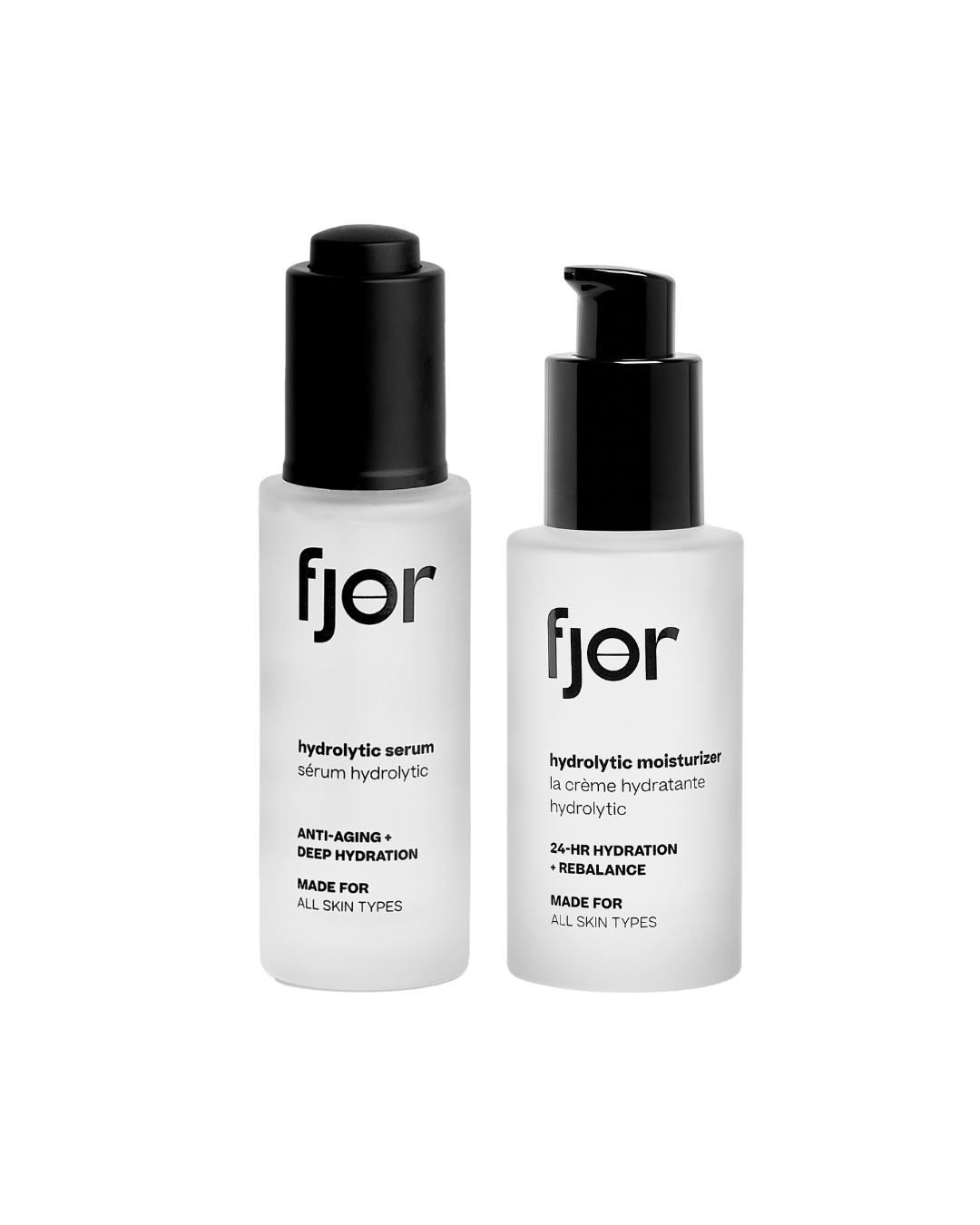
fjör makes gentle products for sensitive, reactive skin, designed for the long term. They are formulated to support the skin barrier and the balance of the skin's microbiome, helping skin look calmer and more even over time. Our Hydrolytic® Serum is where we suggest starting if you experience redness or blemishes, supporting skin health and resilience.

The Hydrolytic® Serum
Daily repair + renewal
How to use it?
Add 1 to 2 drops onto your fingertips and apply the serum on your face and if desired to the neck and décolletage. Apply morning and night after mild cleansing and before using a moisturizer. For dry and reactive skin, we recommend applying 3 to 4 drops for every application.
Additional Tips and Practices
1. Hydration
Drinking enough water throughout the day is part of looking after your overall health, and one small study found that drinking more water improved skin hydration and elasticity (Palma et al., 2015). There is no good evidence that drinking water improves acne or rosacea itself.
2. Healthy Diet
Maintain a balanced diet rich in fruits, vegetables, lean proteins, and whole grains. In a clinical trial, young men with acne who followed a low-glycemic-load diet, with fewer sugary and refined carbohydrates, saw their breakouts reduce more than those on a standard diet (Smith et al., 2007).
3. Stress Management
Incorporate stress-reducing techniques into your daily routine, such as meditation, deep breathing exercises, or yoga. Acne tends to get worse during stressful periods such as exams (Chiu et al., 2003), and emotional stress is a known rosacea trigger (Nobeyama, 2024), so managing stress may help.
4. Sun Protection
Protect your skin from harmful UV rays by wearing sunscreen daily. Choose a broad-spectrum sunscreen with SPF 30 or higher and reapply every two hours when outdoors to shield your skin from sun damage. Sun exposure is a common rosacea trigger (Nobeyama, 2024).
Frequently asked questions
What is the difference between acne and rosacea?
Acne typically involves pimples, blackheads and whiteheads caused by clogged pores and excess oil production. Rosacea shows up as persistent redness, flushing and visible blood vessels on the face.
What triggers acne and rosacea?
Both can be triggered by hormonal changes, genetics, stress and certain skincare products.
How should I use the Hydrolytic® Serum if I have blemishes or redness?
Apply 1 to 2 drops morning and night, after mild cleansing and before moisturizer. For dry and reactive skin, we recommend 3 to 4 drops for every application.
Authors

References
- Palma L, Marques LT, Bujan J, et al. Dietary water affects human skin hydration and biomechanics. Clinical, Cosmetic and Investigational Dermatology. 2015;8:413-421. https://doi.org/10.2147/ccid.s86822
- Smith RN, Mann NJ, Braue A, et al. A low-glycemic-load diet improves symptoms in acne vulgaris patients: a randomized controlled trial. American Journal of Clinical Nutrition. 2007;86(1):107-115. https://doi.org/10.1093/ajcn/86.1.107
- Chiu A, Chon SY, Kimball AB. The response of skin disease to stress: changes in the severity of acne vulgaris as affected by examination stress. Archives of Dermatology. 2003;139(7):897-900. https://doi.org/10.1001/archderm.139.7.897
- Nobeyama Y. Rosacea in East Asian populations: clinical manifestations and pathophysiological perspectives for accurate diagnosis. Journal of Dermatology. 2024;51(9):1143-1156. https://doi.org/10.1111/1346-8138.17411
Contents of this article
- Overview of the Concern
- How fjör Products Fit In
- How to use it?
- Additional Tips and Practices
- Frequently asked questions
Authors